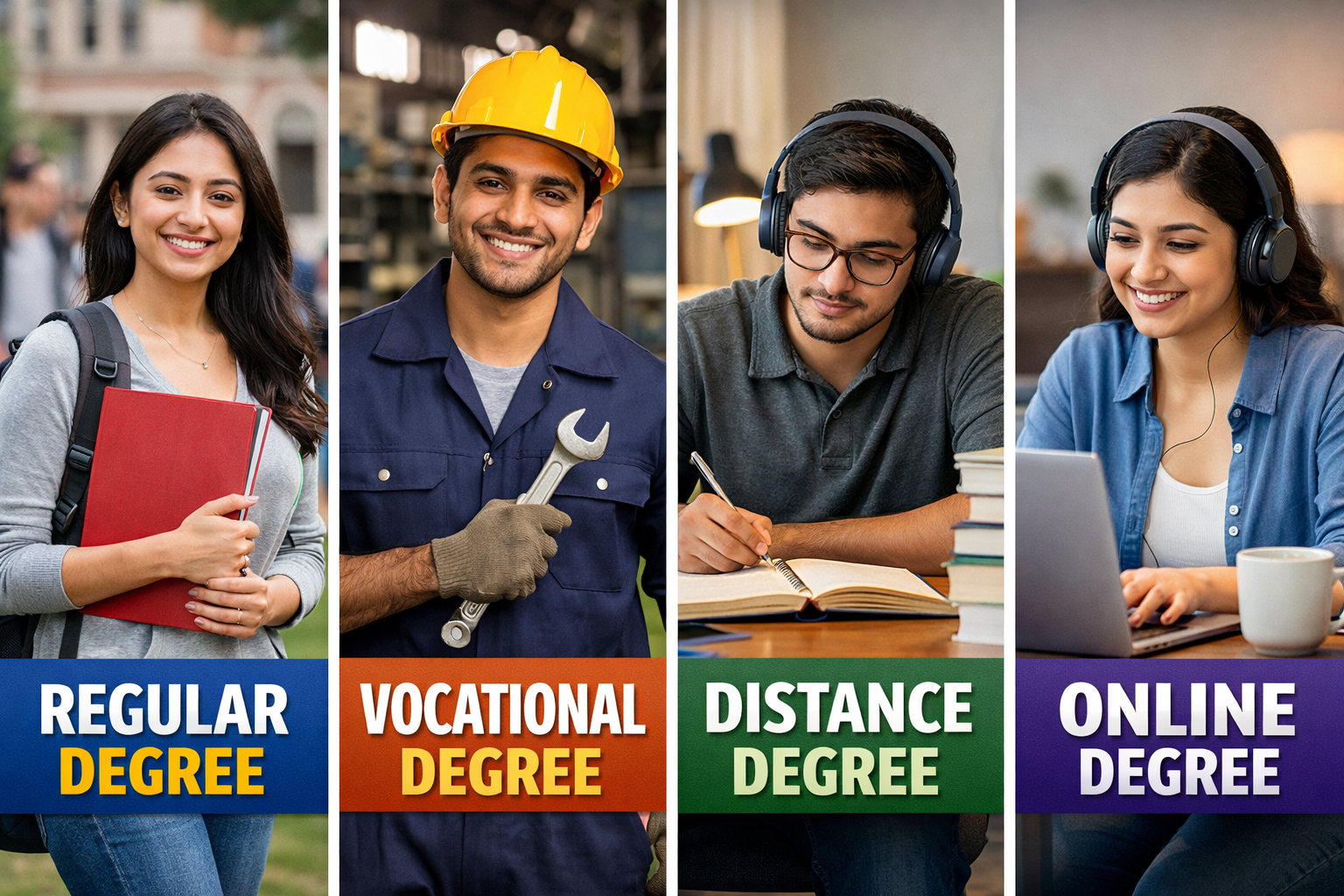
As university admissions commence across India, students and working professionals are diligently comparing study options to determine which degree mode provides the most career value: Regular, Distance or Online?
Education experts recommend basing this decision on long-term goals, budget, and career plans. Here’s a clear explanation of the three modes in simple terms.
Understanding the Three Modes
Regular Degree
A full-time program studied on campus with physical classroom learning. Students attend lectures, participate in activities, and often receive placement support.

Distance Degree
A flexible study mode where students prepare mostly on their own. There are no daily classes. Study material is provided, and exams are conducted at centres.
Online Degree
A digital learning format with live or recorded classes conducted over the internet. Students follow a structured online schedule.
All programs must be approved by the University Grants Commission (UGC) to be valid for jobs and higher education in India.
Comparison Between Regular vs Distance vs Online Degree
| Criteria | Regular Degree | Distance Degree | Online Degree |
|---|---|---|---|
| Mode of Study | Campus-based classroom learning | Self-study from home | Live/Recorded online classes |
| Interaction | Face-to-face with teachers | Very limited | Virtual interaction |
| Average Annual Fees | Around ₹1,50,000 | ₹10,000–₹40,000 | ₹35,000–₹80,000 |
| Flexibility | Fixed timetable | Highly flexible | Flexible but structured |
| PhD Eligibility | Yes | No | No |
| Government Job Validity | Valid | Valid if UGC-DEB approved ( NAAC A+) | Valid if UGC approved ( NAAC A++) |
| Higher Study in India | Fully accepted | Accepted if approved | Accepted if approved |
| Abroad Acceptance | Widely preferred | Case-by-case | Case-by-case |
| Campus Placement | Available | Not available | Rare |
| Best For | Freshers, leadership goals, study abroad | Working professionals | Working professionals upgrading skills |
| Long-Term Growth | Strong corporate growth | Experience-based growth | Skill-based growth |
| Overall Stability | Most stable & widely accepted | Verify approval carefully | Verify approval carefully |
| Industry Acceptance & Reputation | Highest regard and trust | Moderate acceptance, improving with time | Growing acceptance, valued for specific skills |
What Experts Say About Career Impact
For fresh graduates entering the job market, regular degrees often provide stronger placement support and internship exposure. Recruiters frequently value campus training and professional grooming.
Distance and online degrees are commonly chosen by working professionals seeking promotions or qualification upgrades. While they are gaining acceptance, regular degrees still hold the highest industry regard, especially for entry-level roles and leadership positions.
Important Academic Rule
As per UGC regulations:
- PhD admission is allowed only after a regular full-time degree.
- Distance and online modes are not eligible for direct PhD entry.
Students are advised to check course approval status every year before applying.
Regular education may involve higher fees, but experts describe it as a long-term investment with stronger returns in corporate careers and the most stable industry acceptance.
Distance and online education can be practical and affordable alternatives, especially for employed candidates. They are seeing growing recognition, with distance degrees valued for experienced professionals and online degrees appreciated for specific skill upgrades. However, careful verification of UGC approval remains essential.
The right choice depends on your career ambitions, financial capacity, and future academic plans. By aligning the mode of study with your targeted career path and employability goals, a well-informed decision today can pave the way for your professional success tomorrow.