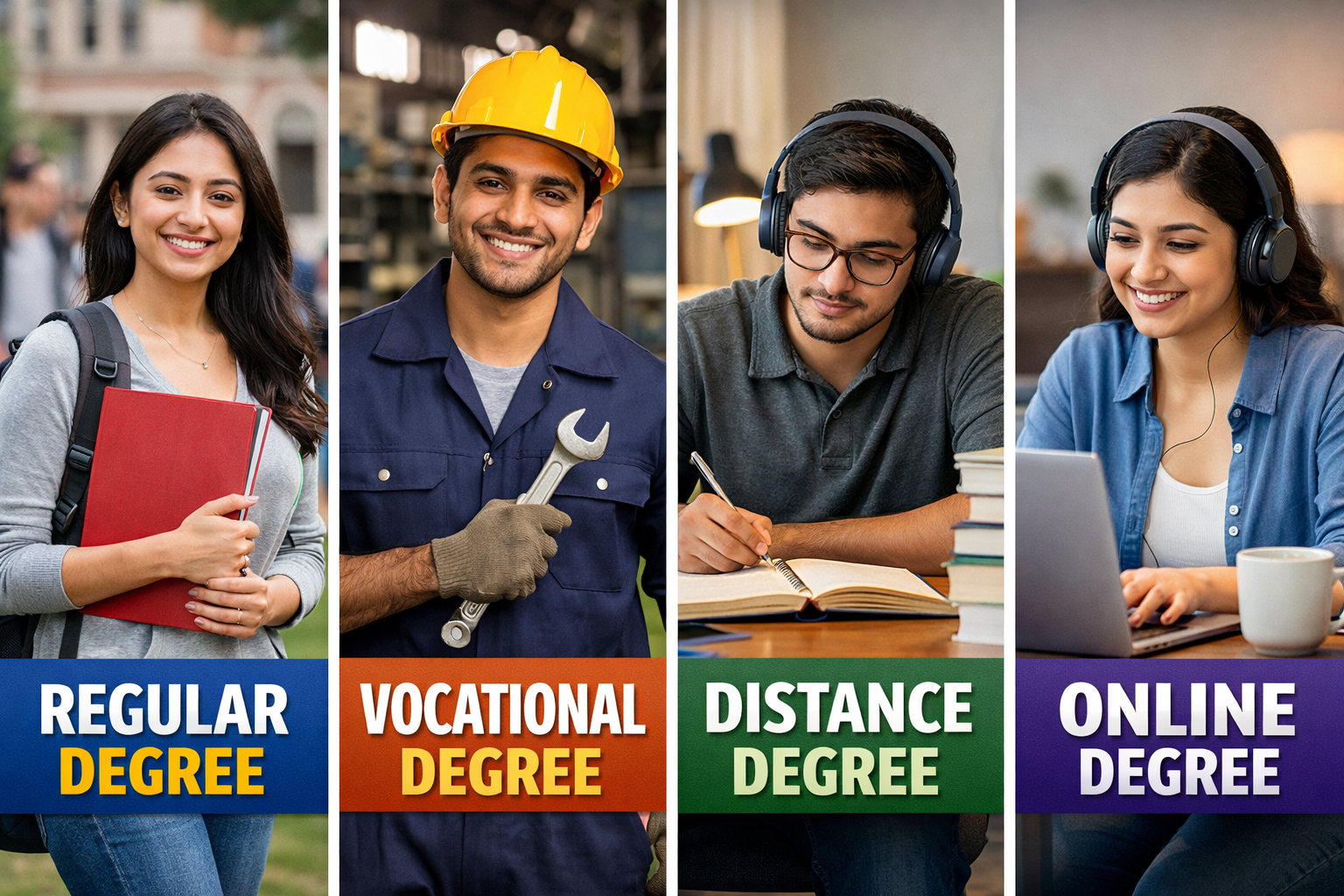
Indian education landscape, choosing the right degree is no longer just about getting a qualification it is about building a strong foundation for long-term leadership success. Students and parents are increasingly evaluating whether a Regular, Distance, or Online degree can truly prepare them for high-level roles such as CEO, Director, HOD, or global corporate leader. As competition grows across industries, the mode of education you select directly influences your credibility, skill development, career mobility, and executive growth potential.
Which degree mode builds real leadership potential Regular, Distance, or Online?
With rising competition for CEO, Director, HOD, and international leadership roles, your choice of education model directly affects your long-term career growth. This detailed report explains the practical, legal, corporate, and career impact of each mode in a clear and structured way.
Understanding the Three Degree Models in India
India currently offers three main recognised higher education formats under the approval of the University Grants Commission:
- Regular (Full-Time Physical Mode)
- Distance Education (ODL Mode)
- Online Degree Programs
Each has its own structure, recognition rules, and career implications.
Regular Degree: The Traditional Leadership Path
A Regular Degree means full-time campus education with physical classroom interaction, structured attendance, internal assessments, and industry exposure.
Key Features
- Daily or weekly face-to-face classes
- Continuous evaluation and project work
- Internship opportunities
- Campus placements
- Faculty mentoring and peer learning
Why Corporates Prefer Regular Graduates
Companies associate regular education with:
- Strong academic discipline
- Real-time problem solving
- Leadership exposure
- Communication development
- Team collaboration
- Industry networking
Institutions like:
- Indian Institute of Management Ahmedabad
- Indian Institute of Technology Bombay
- University of Delhi
- MIT University Sikkim ( Management And Information Technology University)
have built decades of credibility. Graduates from such institutions often receive higher starting salaries and faster promotions.
Career Growth Impact
- Faster progression to senior roles
- Higher probability of international opportunities
- Strong eligibility for PhD programs
- Better acceptance for global education
Distance Degree: Flexible but Limited for Leadership
Distance Education (ODL Mode) allows students to study remotely with limited academic interaction. It is regulated under the Distance Education Bureau (DEB).
Features
- Self-study materials
- Limited academic support
- Minimal classroom exposure
- Lower fee structure
- Designed mainly for working professionals
Where Distance Degree Works Best
- Government job eligibility (if DEB approved)
- Promotion-based roles
- Completing graduation while working
However, when it comes to CEO or Director-level leadership, employers may hesitate due to:
- Limited personality development exposure
- Reduced networking opportunities
- Lower academic rigor perception
Online Degree: Growing but Still Evolving
Online degrees include live or recorded virtual classes conducted through digital platforms.
The National Education Policy 2020 introduced reforms supporting digital learning under National Education Policy 2020.
Features
- Live virtual lectures
- Digital assignments
- Flexible scheduling
- Technology-based learning
Corporate Perception
Online degrees are gaining acceptance, especially in:
- IT sector
- Digital marketing
- Data analytics
- Software development
However, for top leadership roles, challenges remain:
- Limited campus experience
- Less exposure to real-time group dynamics
- Concerns about soft skills development
- Yearly approval-based recognition for some programs
Detailed Degree Comparison
| Factor | Regular Degree | Distance Degree | Online Degree |
| Corporate Preference | High | Moderate | Limited for senior roles |
| PhD Eligibility | Strong ( yes ) | restricted | Limited |
| International Recognition | High | Case-specific | Case-specific |
| Leadership Skill Development | Strong | Limited | Moderate |
| Starting Salary (Freshers) | ₹8–10 LPA (Institute dependent) | Mostly promotion-based | Depends on job profile |
| Long-Term Growth | CEO/Director Level | Mid-management | Department-level growth |
Why Leadership Roles Demand More Than Just A Degree
- Strategic thinking
- Crisis management skills
- Public speaking confidence
- Corporate exposure
- Team leadership capability
- Decision-making under pressure
These competencies are usually built through structured campus interaction, internships, group discussions, and professional mentoring — which are strongest in regular full-time education.
Can Online and Regular Education Be Combined?
Yes. A smart strategy can include:
- Regular undergraduate degree
- Online certifications for skill upgrades
- Executive MBA while working
- Industry experience combined with digital learning
This balanced approach improves flexibility without compromising credibility.
Degree Legal and Approval Considerations
Before choosing any degree mode, verify:
- UGC approval status
- DEB recognition (for Distance/Online)
- NAAC accreditation grade
- AICTE approval (for technical programs)
Recognition matters heavily during job verification, government recruitment, and international applications.
Final Analysis: What Should Future Leaders Choose?
If your goal is:
- CEO
- Director
- HOD
- PhD Scholar
- International Corporate Role
- High-Level Government Position
Then a Regular Full-Time Degree remains the most secure and strategically strong option in India.
Distance and Online degrees are best suited for:
- Working professionals
- Career upgrades
- Flexible learning needs
- Technical skill enhancement
India’s education system is evolving rapidly, but corporate leadership selection remains conservative and credibility-driven. While online and distance education provide flexibility and affordability, regular campus education continues to dominate when it comes to senior executive hiring.